Neighborhood guideOakland County
Detroit, Michigan
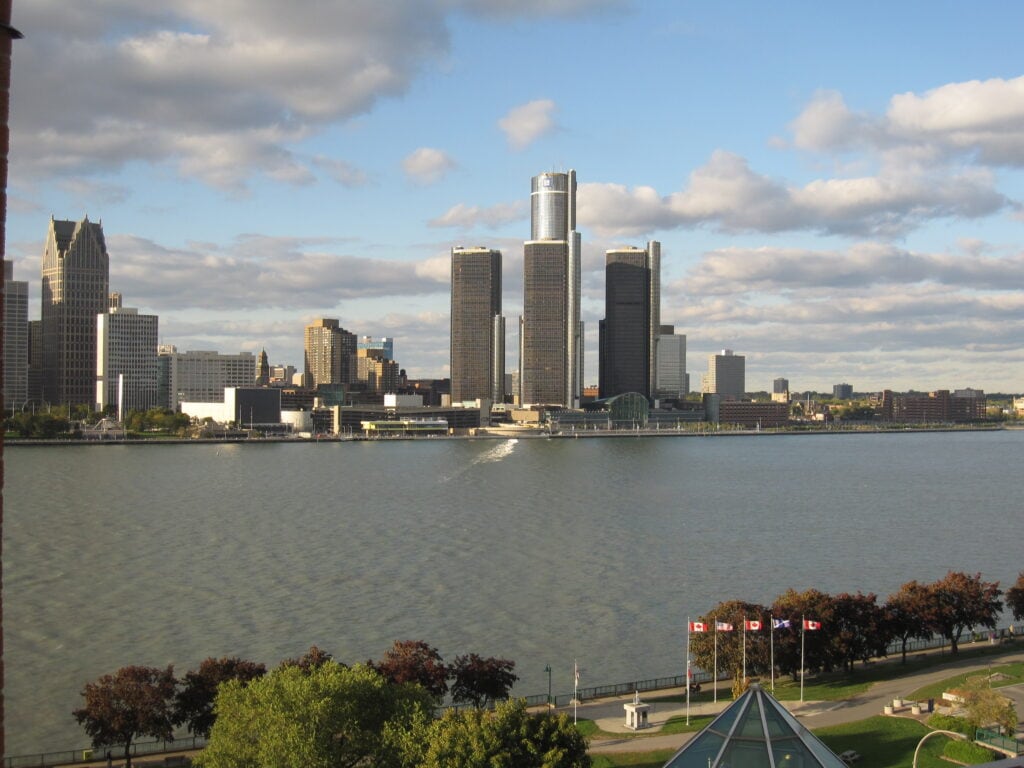
Photo: Detroit skyline (8740760629).jpg (CC BY-SA 2.0)

Living in Detroit, MI: A Local’s Guide

Detroit is the largest city in Michigan and the seat of Wayne County, with 645,705 residents as of the Census Bureau's 2024 estimate. It sits on the Detroit River, directly across the water from Windsor, Ontario, which makes it the only major U.S. city that looks south into Canada. After decades of decline, the population has grown three years running. Buyers here are a mix: young professionals taking over renovated lofts downtown and in Midtown, families putting down roots in the historic districts on the north and west sides, and investors who saw the turnaround early. Most of what people picture as "Detroit" lives inside a few square miles. Downtown, Midtown, Corktown, and the riverfront are walkable and dense. The neighborhoods beyond them are residential and spread out, the way most of the city actually is.
See homes for sale in Detroit

What Detroit is known for

Three things, mostly. The auto industry, which still anchors the regional economy and keeps General Motors' global headquarters in the city, now at Hudson's Detroit on Woodward Avenue. Motown, the record label founded here in 1959 that turned the city into a global name in music. And a downtown sports core that few cities can match for density: Comerica Park (Tigers), Ford Field (Lions), and Little Caesars Arena (Red Wings and Pistons) are all within walking distance of each other.
There's also the food and market culture. Eastern Market, just northeast of downtown, is the largest historic public market district in the country at 43 acres, and the Saturday market has run in some form since the 1800s.
It depends heavily on which Detroit you mean, and that's the honest answer. The greater downtown core (Downtown, Midtown, Corktown, the East Riverfront) has filled in fast: restaurants, the QLine streetcar up Woodward, new and converted apartments, and a lot of foot traffic. You can live there without a car, which is rare for Michigan.
The residential neighborhoods are a different experience. Districts like Indian Village, Boston-Edison, Palmer Woods, and the University District are quiet, green, and full of large early-1900s homes. Other parts of the city are still working through vacancy and disinvestment. Block-by-block variation is real here in a way it isn't in the suburbs, so the specific street matters as much as the neighborhood name.

Detroit, by the numbers

median sale price
$106K
avg days on market
52
price yoy
-3.5%
active listings
481
Prices in Detroit swing more by neighborhood than almost any city in the region. A restored home in Indian Village or Boston-Edison and a fixer a few miles away can sit at opposite ends of the range, so a citywide median tells you very little about what your block is worth. We'll run real comps on the specific street you're looking at, no algorithm guesses, and give you a straight read on value before you make a move.

Downtown and getting around

Downtown Detroit
This is the part of the city that's changed the most. Midtown holds the Detroit Institute of Arts, Wayne State University, and a growing residential base. Downtown is offices, stadiums, and converted high-rises. The Detroit Riverwalk runs along the water and connects to Belle Isle, the 982-acre island park in the Detroit River, now run as a state park by the Michigan DNR. It's larger than Central Park, and it holds an aquarium, a conservatory, a swimming beach, and a Great Lakes museum. For buyers, this corridor is where you'll find lofts and condos rather than single-family homes.
Getting around
Detroit is built around freeways. I-75 (the Fisher and Chrysler Freeways) runs north-south through the city. I-94 (the Edsel Ford Freeway) is the main east-west route and connects to Detroit Metro Airport to the southwest. I-96 (the Jeffries Freeway) comes in from the west, and M-10 (the Lodge Freeway) cuts down toward downtown alongside it. Woodward Avenue is the historic main spine running northwest out of downtown, and the QLine streetcar covers about three miles of it. Inside the greater downtown core you can get around on foot, by streetcar, or by bike. Everywhere else, you'll want a car. Major employers downtown include General Motors (global headquarters at Hudson's Detroit on Woodward Avenue), Rocket Companies, and DTE Energy, all headquartered in the city.

Things to do in Detroit

Walk or bike the Detroit Riverwalk, then cross to Belle Isle for the conservatory, the aquarium, and views of both the city and Canada
Catch a game downtown. The Tigers, Lions, Red Wings, and Pistons all play within a short walk of each other
Shop the Saturday market at Eastern Market, where 150-plus vendors sell produce, meat, and flowers under the old sheds
Spend an afternoon at the Detroit Institute of Arts in Midtown, home to Diego Rivera's "Detroit Industry" murals
Trace the city's music history at the Motown Museum (Hitsville U.S.A.) on West Grand Boulevard
Eat your way through Corktown, the city's oldest neighborhood, and the restaurant blocks of Midtown

Is Detroit a good place to buy?

For the right buyer, yes, and the tradeoff is straightforward. You can get more house, more historic character, and more upside than almost anywhere in Metro Detroit, especially in the name districts. The cost of that is variation: condition, block, and resale value differ sharply from one street to the next, and some areas still carry vacancy and slower appreciation. If you're buying a turnkey home in a strong district or a downtown loft, the path is clear. If you're buying a project or buying purely on price, go in with a good inspection and a realistic plan. Either way, the street-level read is the whole game here.
The homes
The housing stock is older than almost anywhere in the region. Many of the city's single-family homes were built in the first half of the 1900s, when Detroit was booming on auto-plant jobs, so you'll see a lot of brick bungalows, four-squares, and Tudors from the 1910s through the 1940s. The historic districts hold the largest and best-preserved of these. Downtown and Midtown add a layer of converted lofts and newer apartments and condos. Condition is the wild card: two houses on the same block can be a fully restored gem and a tear-down. Inspections and a comp-based look at the specific street matter more here than in most markets.
Schools
Most of Detroit is served by the Detroit Public Schools Community District (DPSCD), which enrolled about 53,000 K-12 students as of the district's September 2024 count. The district runs neighborhood schools plus a set of application and exam schools (like Cass Technical and Renaissance) that draw from across the city. There are also many charter and private options inside city limits, which is part of why families compare schools by individual building rather than by district alone. School boundaries don't always follow what you'd expect from the address, so confirm the assigned school for any specific home before you buy.
Resources

Top questions, answered

The stuff people actually ask us. (No fine print.)

ReadyGet started

Thinking about a move in Detroit?

Work with one of our agents who sells Detroit every week. Get a free home value or see what is on the market.